Remote and Flexible Healthcare Jobs: What They Actually Offer You
This is for people with healthcare customer service, patient access, medical administrative, billing, or clinical support experience who are trying to figure out if remote or flexible work is realistic for them, and what it would actually change.
The quick answer
Remote and flexible are not the same thing, and healthcare postings use both words loosely. A job can be fully remote and still run on a fixed shift schedule with no flexibility at all. A job can be in-office three days a week and give you real control over your time. Before you search for "remote healthcare jobs," it helps to know which specific thing you're after: no commute, control over your hours, predictable hours, or the ability to be somewhere else during the day when it matters. Your healthcare customer service, patient access, billing, or medical administrative experience is relevant to a real set of roles in this space. Whether a specific opening is a good fit depends on the role, the employer, and the requirements listed, not just the word "remote" in the title.
Not sure which roles fit your experience?
Get your free Career Snapshot — a structured look at your experience, goals, and constraints, built in few minutes. We'll show you which roles you qualify for and how to get there.
Show Me What I Qualify ForWhat your Career Snapshot looks like
SampleCurrent Search State
Applying broadly to titles similar to your last role, with a low response rate and no clear sense of which requirements are actually firm.
Immediate Goal
Narrow to 3-5 roles where your day-one evidence is strongest, and stop applying to the rest.
First Recommended Action
Rewrite your resume's top bullet around the highest-stakes decision you made in your last role, not your job title.
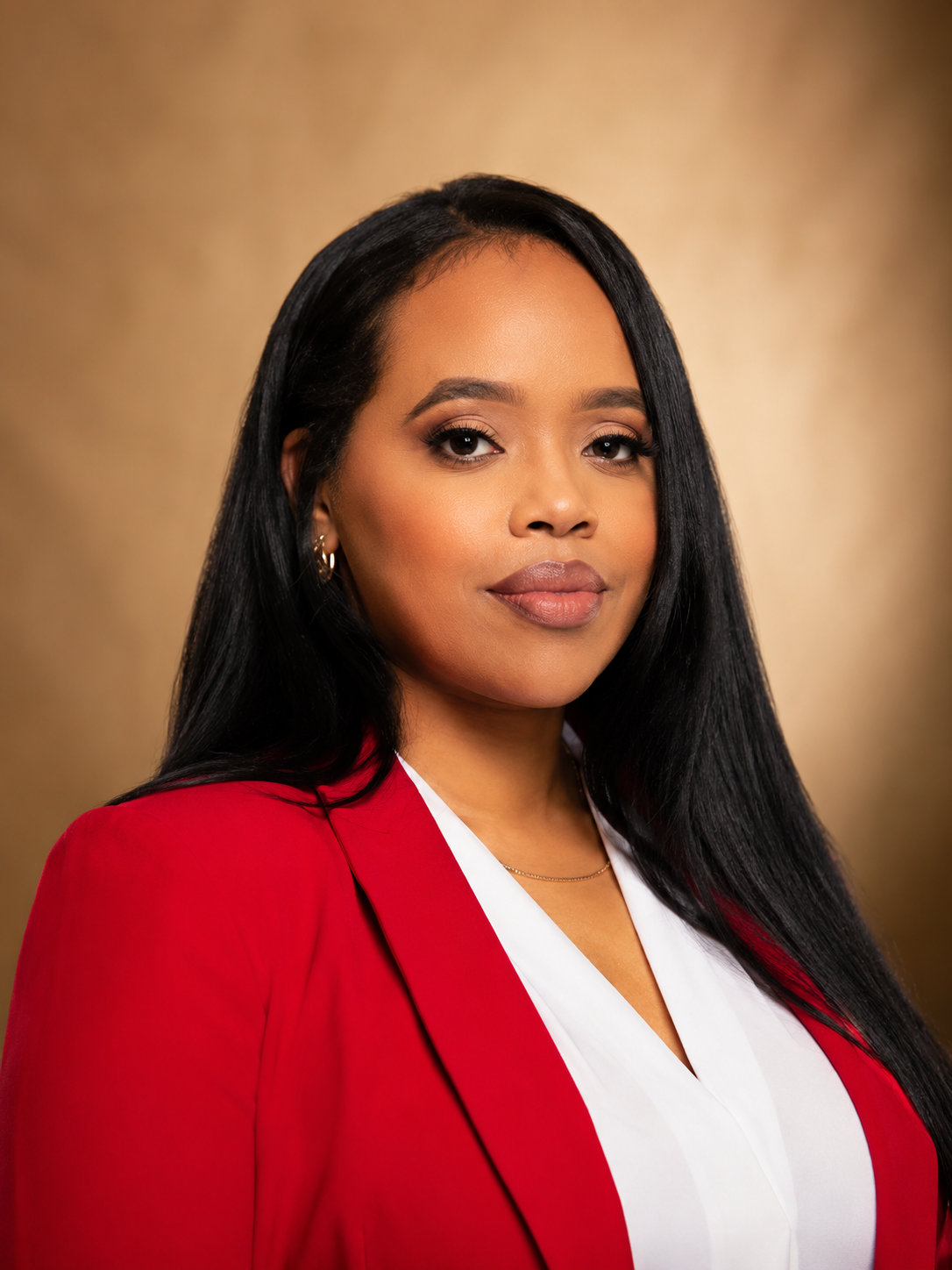
Yendri Casado
Founder & HR Director, Journey to Hired
Yendri spent a decade deciding who got hired as a corporate HR Director. She built Journey to Hired to give job seekers the hiring-side view she used to work behind.
The two-minute version
If you only have two minutes, here's what matters most:
- Remote, hybrid, flexible hours, predictable scheduling, location flexibility, and compressed schedules are six different things. A posting that says "remote" is telling you almost nothing about the other five.
- Working from home is linked to higher reported job satisfaction in federal research, but also to higher reported stress in the same data. Both were true at once. Flexibility isn't a guaranteed upgrade to your well-being. It depends on the workload, the manager, and how well the boundaries hold.
- Experience in patient access, member services, billing, prior authorization, referrals, or medical records is genuinely relevant to a range of remote and hybrid roles, even when the job title doesn't say "healthcare."
- Job scams targeting remote work are a real and growing problem. FTC data show reported losses from job scams and fake employment agencies climbing from $90 million in 2020 to $501 million in 2024.
- Never pay money, gift cards, or provide banking details to get hired. Legitimate employers do not charge candidates.
- Before applying anywhere, ask directly about hours, location restrictions, training format, and how your work will be measured. Don't rely on the word "remote" to answer any of that for you.
I know what you're actually asking
You're not asking me to define "remote work." You already know what that word means in theory.
What you're actually asking is whether a job like this could give you back a piece of your life. Time for your kids' after-school pickup. One less hour in traffic. A shot at being present for things you keep missing.
You might also be tired in a specific way. Tired of scanning fifteen listings and not knowing which ones are real. Tired of a job title that doesn't come close to describing what you actually handle in a day. Tired of wondering if "flexible" in a posting means anything at all.
That's a reasonable place to be. It's not a sign you're behind.
What my own path taught me about this
I didn't come up through a traditional path into HR leadership. I worked retail, sales, and administrative jobs that paid the bills before I understood how hiring actually works from the inside.
My current role isn't fully remote. It gives me meaningful flexibility within clear expectations, and that combination is what actually matters to me day to day. It's let me build stronger working relationships, keep growing professionally, build Journey to Hired on the side, and still make it to my kids' Little League games and practices.
I bring that up because "remote" was never really the thing I was chasing. Flexibility, on terms that were clear and workable, was. That distinction is the whole point of this article.
What the research actually shows
Federal data on this is more useful, and more mixed, than most articles admit.
A 2022 NIOSH analysis of national data from 2002 to 2018 found that schedule flexibility (some ability to change your work hours) was linked to a 20% drop in reported job stress and a 60% increase in the likelihood of job satisfaction. Being able to take time off for family needs showed an even stronger link to lower stress. Those numbers are about association, not proof that flexibility caused the improvement for any one person.
Working from home told a more complicated story in the same research. It was linked to both a 26% increase in reported job stress and a 67% increase in reported job satisfaction, at the same time. The researchers pointed to the likely reason: working from home can support work-family balance and blur the line between work and everything else, both at once. Remote work has held fairly steady at around a third of the workforce having worked from home at some point since 2010, according to this data.
The most recent large-scale federal survey on flexible schedules and remote work specifically, published by the Bureau of Labor Statistics in 2019 using 2017-2018 data, found that about 25% of wage and salary workers worked at home at least occasionally, and 57% had some ability to vary their start and stop times, though only 29% of those arrangements were formal written agreements. I'm citing the most recent official version of this survey that's publicly available. It predates a lot of the shift toward remote work since 2020, so treat the exact percentages as a reference point, not today's number.
The honest summary: flexibility tends to help, on average, across large groups of workers. It does not automatically improve anyone's mental health, and it comes with real trade-offs around boundaries and workload that depend heavily on the specific job and manager. Group-level research describes a pattern. It doesn't predict what will happen in your specific situation.
What employers are actually screening for
A job title like "medical assistant," "patient access rep," or "member services associate" tells an employer very little on its own. What they're actually trying to figure out from your resume and interview is whether you can do the specific work the role requires, day one.
Here's the difference between a claim and evidence, the way a hiring manager reads it:
"Good communicator" is a claim. "Explained benefit changes to members, resolved billing escalations, documented each interaction, and coordinated next steps with two other departments" is evidence.
"Can work independently" is a claim. "Managed a daily queue of 30 to 50 cases, prioritized urgent items, met same-day follow-up deadlines, and made documented judgment calls without direct supervision" is evidence.
If you've worked in patient access, scheduling, billing, prior authorization, referrals, or medical records, you likely have real evidence for exactly this kind of language sitting inside your current job, even if your resume currently just lists the job title and a few generic duties.
Six things employers screening for remote-readiness actually look for
I call this the Remote Readiness Proof Check. Before you apply to a remote or hybrid role, look for evidence you can point to in each of these six areas from your current or recent work:
- Customer or patient handling under pressure. A specific example where you kept someone calm, informed, or on track during a stressful interaction.
- Process knowledge. Evidence you know a defined workflow well enough to follow it correctly and flag exceptions.
- Systems proficiency. Comfort with the kind of software the role will use (an EHR, a scheduling platform, a claims system), even if it's not the exact same system.
- Documentation accuracy. A specific example of keeping accurate, complete records under time pressure.
- Independent judgment. A moment where you made a reasonable call without someone standing over you, and it held up.
- Follow-through without supervision. Evidence you meet deadlines and close loops when no one is physically checking on you.
You don't need all six to be strong. You need to know honestly which ones you can prove right now, and which ones are a gap worth naming rather than guessing past.
Know what you're actually looking at: six different things
Postings use these words loosely. Here's what each one actually means, and what to ask if a listing doesn't say:
Fully remote
Usually means: Work happens away from a company location, but the hours may still be fixed.
Ask: “Are the hours fixed or self-set? Are there state or residency restrictions?”
Hybrid
Usually means: Some required in-office time, sometimes only during training.
Ask: “How many days are on-site, and is that permanent or temporary?”
Flexible hours
Usually means: Some control over when you begin and end work.
Ask: “How much variation is actually allowed day to day?”
Predictable scheduling
Usually means: Hours repeat consistently, which can help with family planning.
Ask: “Is the schedule guaranteed, or can it change with notice?”
Location flexibility
Usually means: You can work from more than one approved place, but not necessarily anywhere.
Ask: “Which locations qualify, and does that include another state?”
Compressed schedule
Usually means: Full-time hours are completed across fewer, longer working days.
Ask: “What are the actual daily hours, and is overtime involved?”
Copy-ready searches to try
Instead of searching only "remote healthcare jobs," which mostly surfaces massive, generic listings, try searching by the actual work:
- "remote patient access representative"
- "remote member services healthcare"
- "remote medical records specialist"
- "remote benefits verification"
- "remote prior authorization coordinator"
- "hybrid claims support healthcare"
You can also look up titles such as Patient Representatives on O*NET to see the actual task list the federal government associates with that occupation, and compare it against your own day-to-day work before you apply.
Two real employer examples to study
These examples are not endorsements or promises that an opening is available to every reader. They show how employers describe the work and the conditions candidates should verify.
- CVS Health’s customer-care overview describes paths such as service advocate, health concierge, claims-benefit support, prior authorization, benefits verification, and complaints and appeals. It also makes clear that work arrangements vary by position.
- This UnitedHealth Group customer-service posting illustrates the kind of evidence an employer may request, including healthcare customer-service experience, problem solving, schedule availability, reliable internet, and a private workspace.
Use employer pages to study requirements and language. Always confirm that a specific opening is current before applying.
A 20-minute action plan
This doesn't require rewriting your resume tonight or applying to fifty jobs this week.
- Pick two of the searches above that sound closest to your background.
- Save two current postings for each search (four total).
- Read the requirements section of each, not just the summary. Highlight anything that repeats across postings.
- For one repeated requirement, write one honest, specific example from your real work that demonstrates it.
- Note which postings mention hours, location rules, or training format clearly, and which don't. That's your list of what to ask about before you apply to the ones that stayed vague.
That's it. Twenty minutes, not a career overhaul.
What to watch out for
A few risks worth naming directly, because they're common in this specific job category:
Scams. FTC data show reported job-scam and fake-employment-agency losses rising from $90 million in 2020 to $501 million in 2024. Watch for unsolicited offers by text or social media, promises of high pay for minimal effort, interviews conducted entirely by chat, and any request for payment, a "starter kit" fee, or your banking information before you're formally hired. Never pay to get a job. Verify any listing on the employer's own careers page before you invest time.
Fixed schedules hiding behind the word "remote." Many fully remote healthcare roles still run on rigid shift hours tied to call center or patient-facing coverage. Ask before you assume.
State and location restrictions. Some healthcare-adjacent roles, especially anything touching insurance or licensed clinical work, are restricted to specific states. Confirm this before you get invested in a listing.
On-site training requirements. A role advertised as remote may still require one to several weeks on-site for training. Ask directly.
Workspace and privacy requirements. Roles handling patient information (PHI) often require a private, secure workspace and sometimes a background or credit check. Confirm what's expected before you assume your setup qualifies.
Buying a credential you don't need yet. Some of the roles above hire on demonstrated experience, not a new certificate. Before spending money on a program, compare your actual experience against several current postings first. If a credential is a genuine gate for a specific role, it will say so directly in the requirements, not just the description.
Assuming one duty means you're qualified for an entirely different occupation. Handling insurance calls does not automatically mean you're prepared for licensed claims adjusting, and clinical documentation experience does not automatically mean you're prepared for coding work that requires a specific credential. Compare your evidence against the actual requirements listed, role by role.
Frequently asked questions
Is a remote healthcare job automatically more flexible than an in-office one? No. Many fully remote roles run on fixed shift hours tied to patient or member coverage. Flexibility is a separate feature from remote location, and postings don't always distinguish the two clearly. Ask directly about hours before assuming.
Does working from home improve mental health? The research doesn't support that as a blanket claim. Federal data has found working from home linked to both higher reported stress and higher reported job satisfaction in the same population, depending on how well work and personal boundaries are managed. It may help some people and strain others, often depending on workload, manager support, and whether boundaries hold.
What healthcare-adjacent jobs can someone with patient access or billing experience realistically look into? Roles worth investigating include patient access, member services, benefits verification, prior authorization coordination, claims support, and medical records work. Whether a specific opening is a fit depends on that employer's actual requirements, not the job title alone. Compare your evidence against several current postings before ruling a role in or out.
How do I know if a remote healthcare job posting is a scam? Confirm the listing exists on the employer's own careers page, research the company name, be cautious of chat-only interviews and fast offers, and never pay any money or share banking details before you're formally hired through a verifiable process.
Do I need a new certification to move into a remote or hybrid healthcare-adjacent role? Not always. Roles like patient access, member services, and benefits verification are often filled based on demonstrated experience. Some paths, like medical billing and coding, typically do require a specific credential. Check the requirements on current postings for the specific role you're considering rather than assuming either way.
Start by looking at your own evidence
You don't need to figure this out alone or from scratch. Journey to Hired's free Career Snapshot takes about 90 seconds, asks five questions about your actual work, and doesn't require a resume or a credit card. It's a starting point for seeing what your experience may support, not a determination of what you qualify for.
Start your free Career Snapshot
Continue with these JTH guides
- What Jobs Am I Qualified For? A 30-Minute Hiring-Side Test
- Medical Assistant or CNA Career Change: Roles Worth Investigating
- From Survival Jobs to HR Leadership: Why I Built Journey to Hired
Sources and further reading
- NIOSH: Work Flexibility and Worker Well-being
- U.S. Bureau of Labor Statistics: Job Flexibilities and Work Schedules
- Federal Trade Commission: Top Scams of 2024
- O*NET OnLine: Patient Representatives
- CVS Health: Customer Care Careers
- UnitedHealth Group: Customer Service Representative Example
About Yendri
Yendri Casado is the founder of Journey to Hired. She grew up in the Bronx, moved to Providence, Rhode Island at 16, and became a mother young. She built a nontraditional path from retail, sales, and administrative work into Human Resources and HR leadership, working on the hiring side of the table in recruiting, candidate evaluation, and workforce decisions. She's building Journey to Hired while continuing her professional career and raising her three kids.
Research reviewed August 2026. This article provides general career education, not a hiring decision, mental health treatment, or a promise of employment. Requirements vary by employer. Compare your own experience against current postings before making a decision.